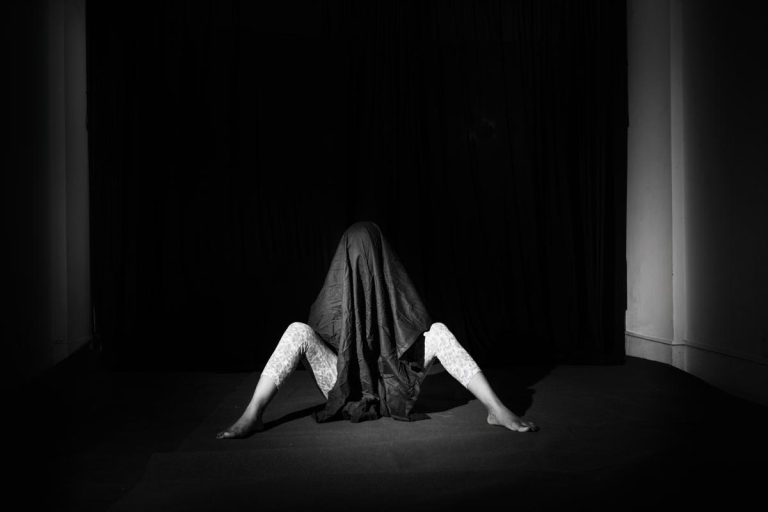
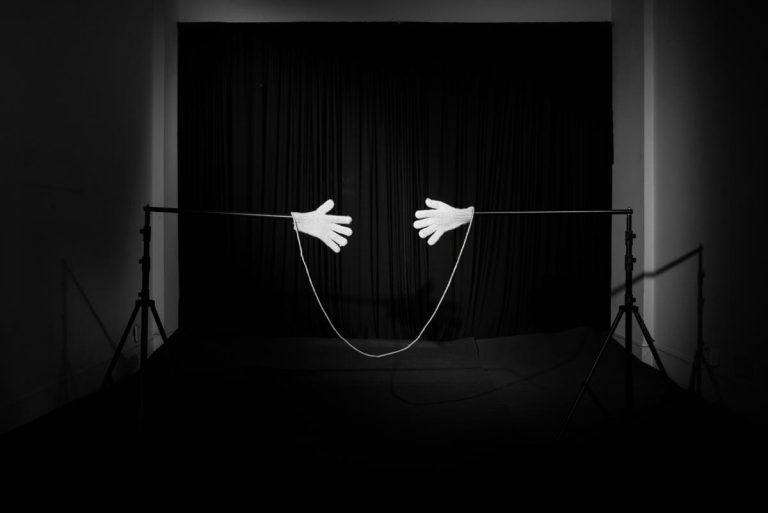
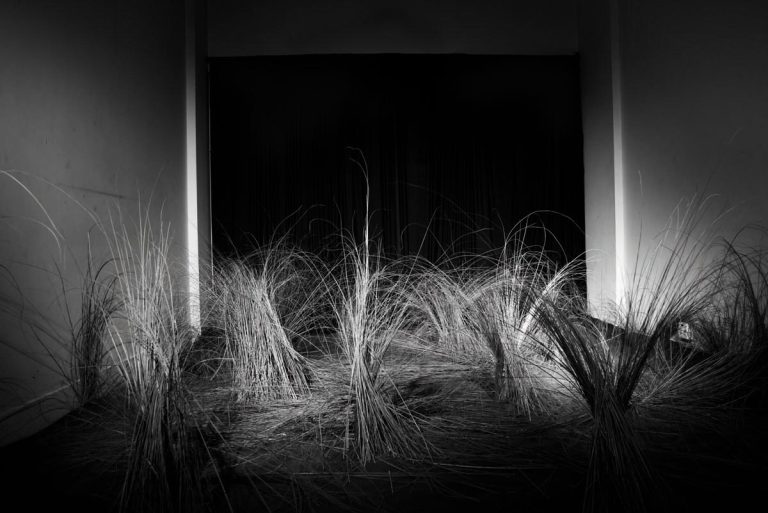
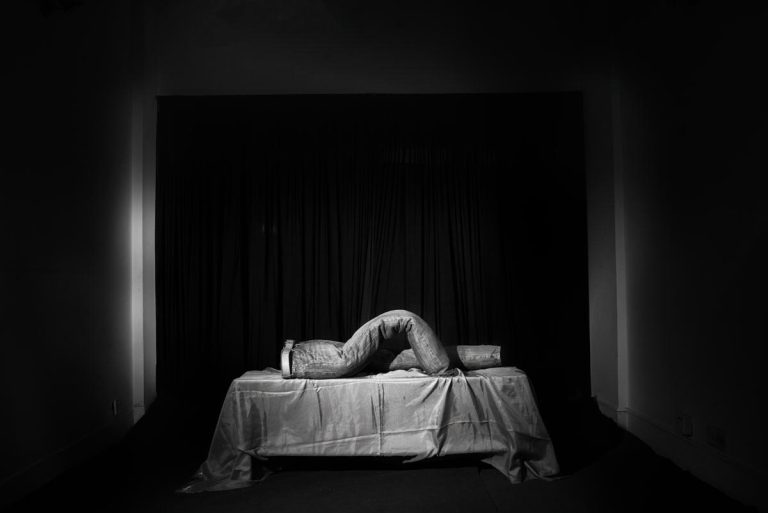
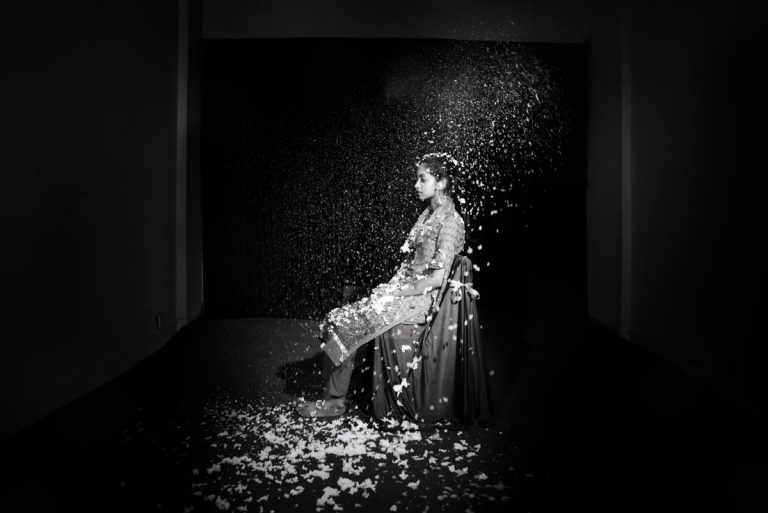
Social violence in Bangladesh has become relentless, pressing fear and unease into the rhythms of daily life. In Mundane, Prithi draws on these moments in quiet interior spaces, placing scenes of violence within the familiarity of domestic rooms. She invites viewers to enter the unseen psychological landscapes of victims and their families. The images do not document specific events—they are imagined reenactments that capture the emotional truth of such moments.
The individuals in the photographs are members of the community; through their bodies, gestures and emotions, Prithi shapes a space where people can speak about violence and the burdens it leaves behind. She gathered accounts of violence from social media, newspapers and people she knew, preserving these as silent documents. This became an act of realisation that affirmed that these events happened and must not fade in collective memory. It also created a bridge to her staged photographs, allowing the images to hold the weight of real stories.
Mundane refuses the normalisation of violence while carefully noting the pressures of censorship and surveillance. It aligns itself with the victims, revealing their resilience, vulnerability and the quiet strength that holds them together. The work turns its attention to the mental image beyond the visible surface, acknowledging that the body carries gestures shaped by caution, training, silence or fear, which can change during moments of crisis. Mundane offers a shared space of reflection, where silence begins to sound like speech and the dignity and individuality of each victim can be held with care.
Salma Abedin Prithi is a Bangladeshi photographer and visual artist whose practice explores memory, social violence, and the psychological weight of everyday life. Her work often combines photography, text, and archival materials to uncover hidden struggles within familiar spaces. She continues to create work that protests silence, preserves memory, and evokes reflection.
Her series Mundane examines social and domestic violence through staged, emotionally charged scenes that reveal fear, endurance, and collective trauma, blending realism with performative storytelling to investigate intimacy, dependency, and power.
She has exhibited LOVE: Still Not the Lesser (Museum of Contemporary Photography, Chicago, 2023), at Chobi Mela (Dhaka, 2021), and 4 Women (Mannheimer Kunstverein, 2020).