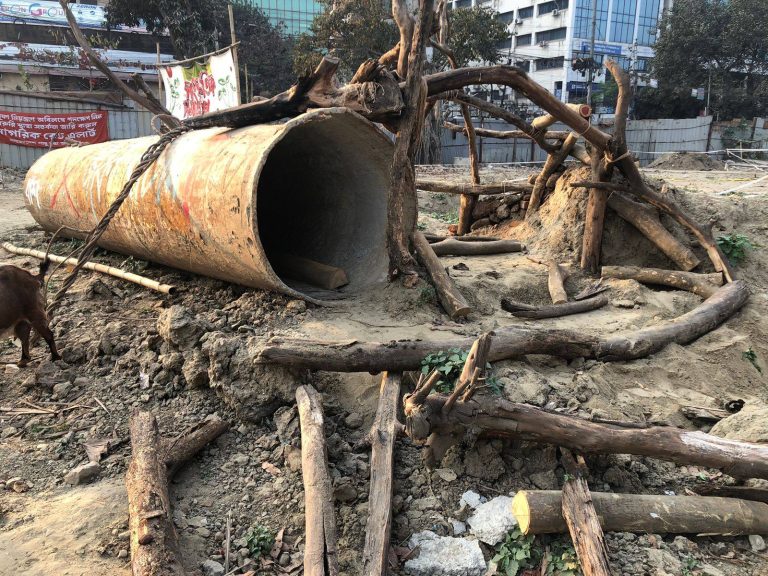
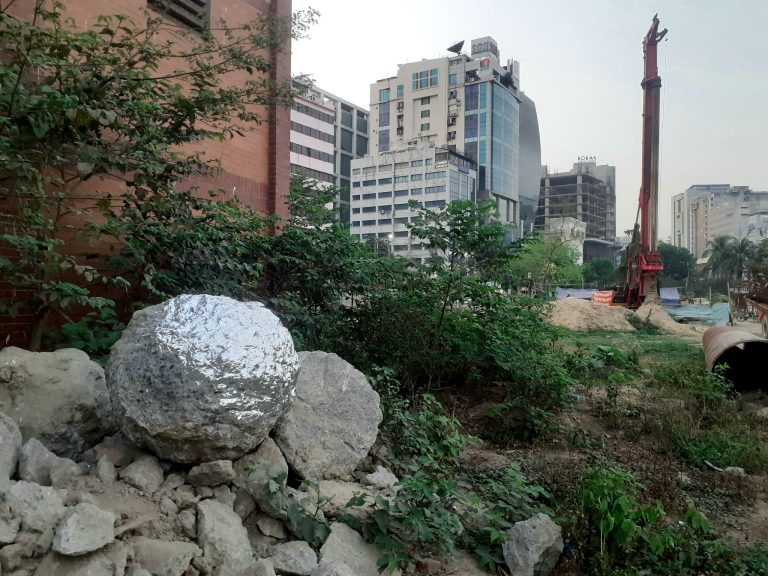
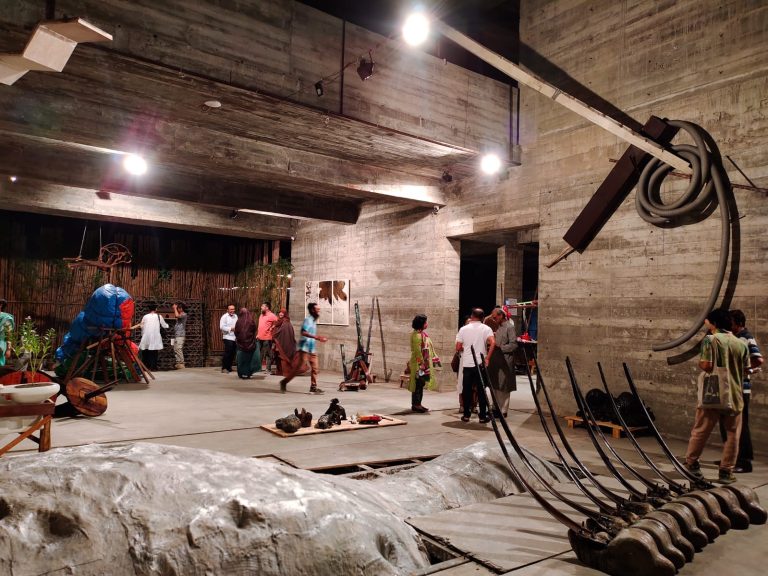
At the centre of Syed Muhammad Zakir’s practice is a sharp political and ecological belief—that human ego and modern ideas of “progress” often grow by taking from nature, by pushing into the homes of other living things. He carries this conviction into his art. He gathers what the city throws away—plastic, fallen tree trunks, broken pieces of urban life –and reshapes them into sculptures and environments that ask us to look closely at our own role in the slow harm done to the earth. In his drawings and graphic works, strong lines and simple shapes guide the eye. Metallic tones and bright colours create a sense of other times and layered worlds, echoing the themes of change and collapse.
Zakir stays deeply rooted in people and places. For him, art is not only something to be shown but something to be lived—a form of quiet protest and a gentle reminder that we belong to nature, and not the other way around. Zakir’s work, which has poetic depth and a sense of committed activism, brings together social, environmental, and cosmic thought. These ideas move between his reality and the wider universe he imagines, which makes his art practice feel intimate and conversational.
Syed Muhammad Zakir is a Bangladeshi sculptor and interdisciplinary artist based in Dhaka. His work explores the human ego, our relationship to nature, and the consequences of modern development, working across performance, installation, and land art. Using simple materials, strong lines, and vivid colours, Zakir urges viewers to rethink their place within the natural world.
His projects include his participation in the six-month sit-in at Panthakunja Park, where artists, citizens, and children resisted the felling of over 2,000 trees for the Dhaka Elevated Expressway. His work is held in collections such as the University of Dhaka. He has also exhibited in public spaces and community-driven contexts across Bangladesh.