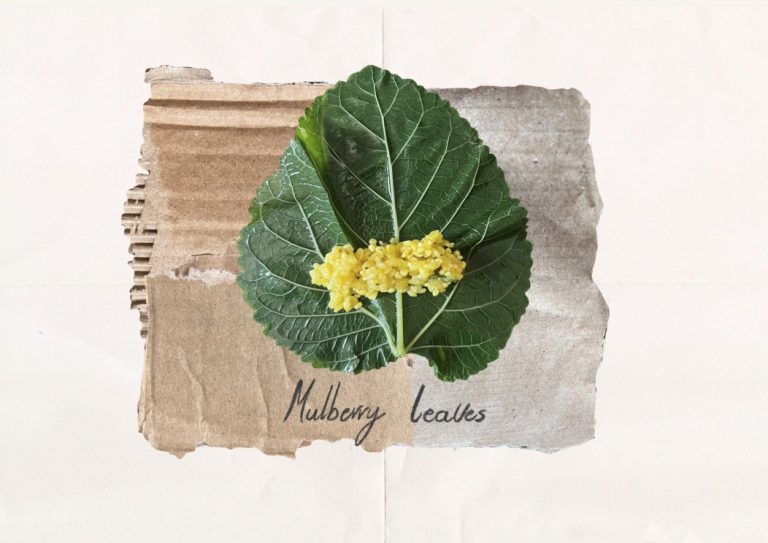
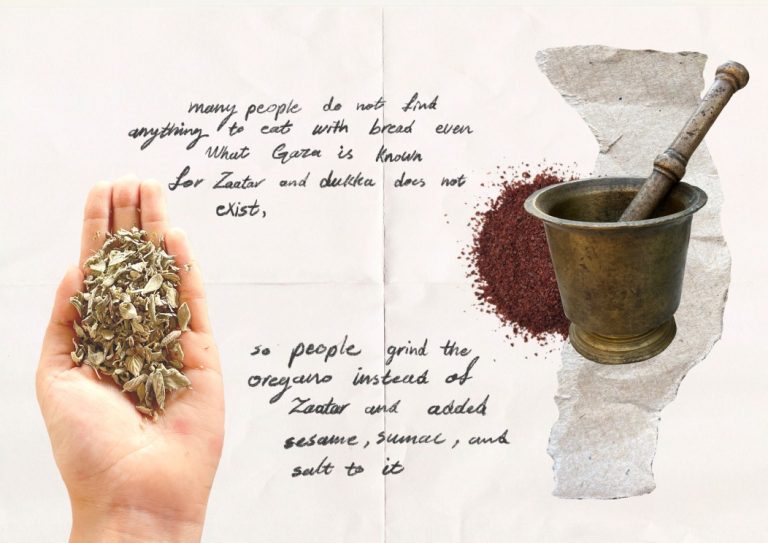
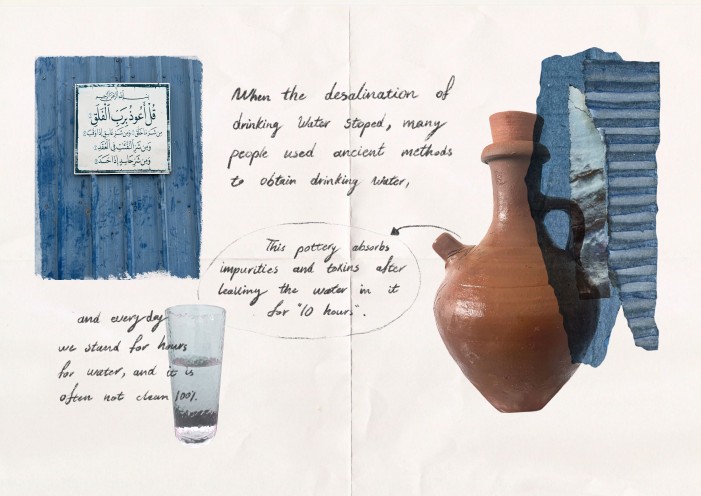
Genocide Kitchen is a diary from the earliest days of Israel’s campaign of extermination that documents how starvation and famine have been wielded as weapons of war. In these collages, Samaa Abu Allaban, an artist living and working in Gaza, reflects on her people’s struggle to maintain agency over their own sustenance.
Next to a mud oven or bread streaked with blood, she writes about the difficulty of finding flour, gas, and wood amid relentless attacks. These images capture makeshift ovens, inventive cooking methods, and communal meal preparations. Handwritten notes add a personal touch, highlighting the resilience and determination of a community under siege. Cooking and sharing meals become acts of resistance, underscoring that no matter the aggression they face, their spirit remains unbroken.
The Zionist occupation has tried to achieve through famine what it cannot through force. Aid lines have become killing grounds—in the last month alone, more than 549 people have been martyred while seeking relief. Genocide Kitchen is an archive of people fighting not only to survive, but to preserve dignity, community, and a way of living. Constant displacement, bombardment, and the deliberate obstruction of food and aid have not broken their will. Even as water is poisoned and flour weaponised, Gaza continues to guard life with steadfast defiance. Amid an unfolding genocide, this work reflects the resilience of Gaza’s people as they struggle to secure the most basic elements of life.
Samaa Emad is a visual artist based in Gaza whose work explores the intersections of art, identity, and humanity. Her practice reflects on the complexities of home, resilience, and the transformative power of oral history, constantly pushing the boundaries of traditional art to evoke emotional depth and critical reflection. She holds a Diploma in Graphic Design and works across animation, digital media, and other visual forms.
Samaa’s work has been exhibited internationally, and she has illustrated several children’s books, combining her distinctive style with storytelling to inspire and educate young audiences. Through her art, she fosters empathy, curiosity, and understanding of diverse lived experiences.