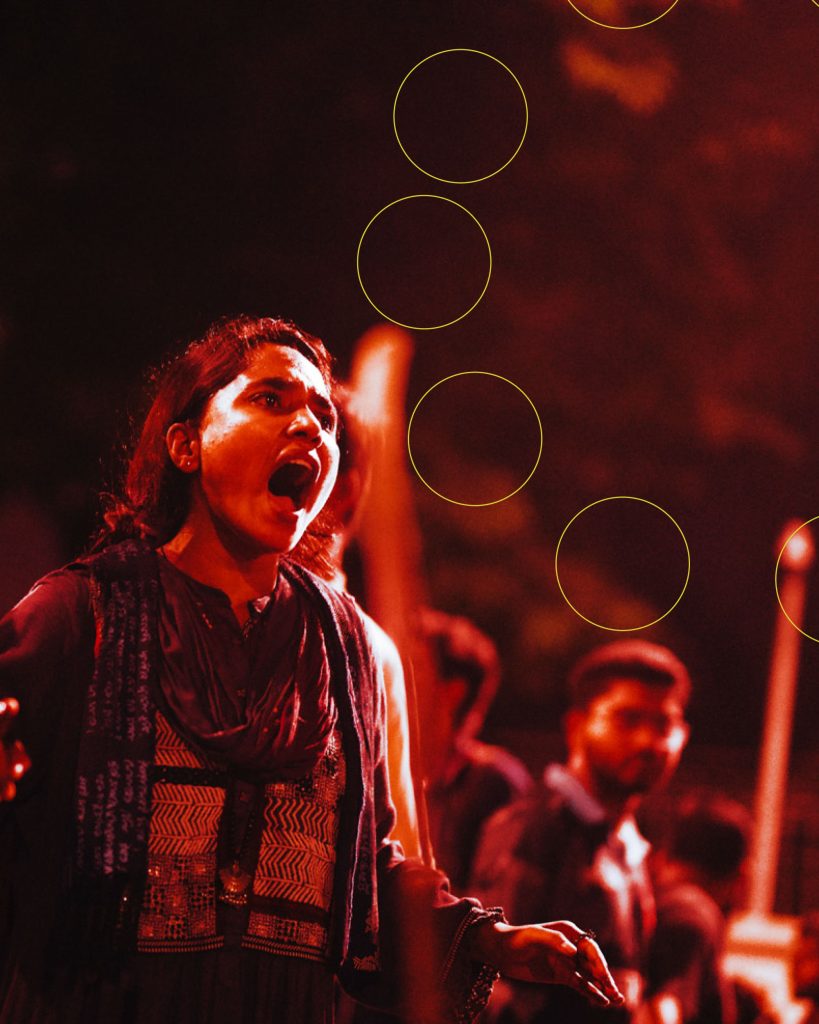
Women were at the heart of the July Uprising—powerful enough to shift the country’s imagination of what resistance could be. But as the dust settles after the fall of the autocracy, where have these women gone?
July’s women had not limited themselves to chanting slogans—they built networks, set strategies, and pushed the movement forward. And when the former autocrat belittled students as the “grandchildren of collaborators” (‘rajakars’, a much hated epithet, refer to those who collaborated with the Pakistan army during the 1971 liberation movement), it was women who transformed that insult into a political breaking point. On the night of 14 July, furious students lit the spark of resistance. Defying the deeply entrenched culture of fear, female students broke out of locked dormitories and marched, their courage gathering male students in their wake. Within hours, the sparks leaped across campuses and cities, until the whole nation could feel it. That was the night the authoritarian edifice of fear began to crumble.
But, no sooner had the uprising reached its peak than the erasure started. Women were steadily pushed out of their agency in the movement they helped succeed. In discussions of reform and reconstruction, their presence faded into ornamentation—token rhetoric rather than genuine recognition in decision-making, leadership, or even the narratives of victory.
The same women—both the well-known faces and countless others—who braved family restrictions, crackdowns, and threats of violence are now targets of cyberbullying and harassment, as though the message is that they were necessary when the streets burned, but dispensable as power is being rearranged.Many have been forced into retreat. This is unacceptable. No democratic dispensation can be built while excluding half its population.
Research and text by Jannatul Mawa