We made this for you, the reader, to pick up a thread—any thread—and feel it
pull you into a vast, interconnected story.
Samah Gafar
For over two years, as the genocide in Gaza has been live-streamed on our screens, we have watched as governments and international organisations have failed to take any concrete action to bring and end to this horror. Images of shredded bodies, demolished homes, amputated children, starving and maimed infants, and mothers buried beneath rubble circulate endlessly across digital platforms, rendering violence perpetrated by Israel at once hypervisible and unbearably ordinary. The impunity with which this genocide is being perpetrated is causing our humanity to falter.
In the face of such unrelenting violence, (un)learning Palestine, embodying solidarity invites us all to unlearn and learn anew, in an effort to understand the struggle for Palestine as a struggle for justice, dignity and liberation which echoes in many localities across the South.
Palestine in its own right merits our dedication; it’s an obligation rooted in an ethic of care and a politics of emancipation. […]. Applying and exercising those principles mean the risk of sacrifice and discomfort, a divestment from the fundamentals of settler colonialism, corrosive nationalism, ethnic and religious supremacy.
Parsa Sanjana Sajid
The space brings together books, maps, photographs, films and archival fragments that foreground how efforts to erase Palestine since more than a century have been met with enduring solidarity from the global majority.
A group of artists, historians, and researchers guide visitors through a collection of books, maps, photographs, films and archival fragments via personalised letters, offering readers different threads into the many stories of struggle and solidarity in the world.
Kashmir is my compass. For me, everything begins here. […] Fighting occupation is not merely a matter of technique or wit. I believe it is a matter of the heart.
Malik Irtiza
Maen Hammad reconstructs fragments of his family archive through imagined conversations, Samah Gafar traces a Pan-African Cairo through an unfolding constellation of maps. Diwas Raja KC presents a selection of cinematic gestures bound by shared histories of struggle, exile, imagination, and renewal, that use the camera as a tool for liberation and resistance. Parsa Sanjana Said, Malik Irtiza and Voices Against Genocide trace resonances with Palestine across collective movements for liberation in South Asia. Shahd Abdusalama reviews her own lifeline in Gaza through her personal history, but also her research on visual productions and representation of Palestinian refugees in Gaza;, and Samia Khatun and Clive Gabay reflect on colonial and anti-colonial imaginations of land.
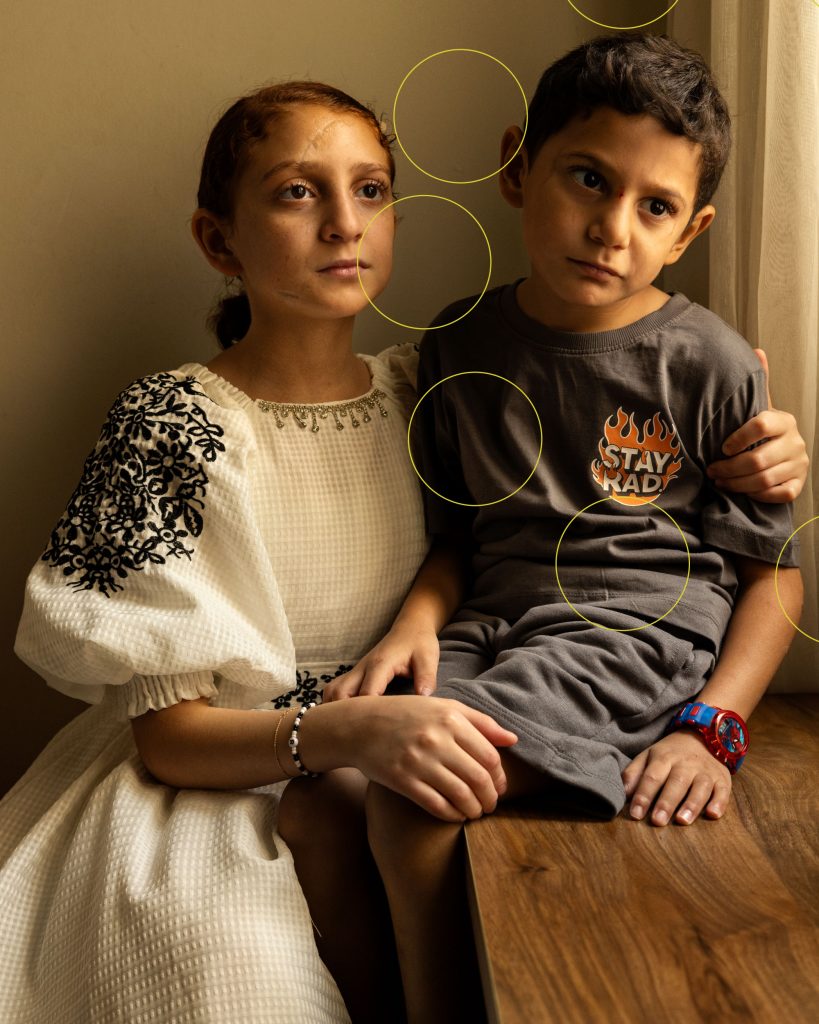
The harrowing photographs by Belal Khaled and Samar Abu Elouf remind us of the destruction and unspeakable violence the Palestinians in Gaza continue to endure daily, while Samaa Emad’s collages compel us to confront the everyday conditions of survival during a genocide.
Palestine never leaves you. It is more than a place that holds my most precious people
and happiest memories; it is the ideal of justice that we carry and fight for.
Shahd Abusalama
We intend this room to function not only as a space for reflection but as a passage through these archives: a process of reading, listening, and thinking together across geographies and histories that enable us to better understand the systems of complicity and impunity that govern our world today, and the possibilities of resisting the latter by embodying solidarity.
Photography in Palestine both expands and exhausts the power of visual representation, as images of shredded bodies, demolished homes, amputated children, starving and maimed infants, and mothers buried under mounds of rubble circulate across digital platforms, rendering the violence brought on by the Israeli state at once hyper visible and unbearably ordinary. Photography functions here as a conduit of testimony and solidarity, yet also exposes the limits of visibility in transforming material and political realities.
The (un)learning Palestine space offers a space to reckon with Palestine as a whole and all the questions it triggers. It links the stories of Palestine to broader histories of colonisation, occupation, and resistance through a constellation of books, articles, maps, illustrations, photographs and films. A group of artists, historians, and researchers have been invited to guide visitors through this material, creating opportunities to engage critically with Palestine’s visual and political histories. The photographs and archival fragments migrate from homes and libraries into a shared public space, forming a collective site of study and encounter. The room functions not only as a space for reflection but as a passage through these archives: a process of reading, listening, and thinking together across geographies and histories that enable us to better understand the systems of complicity and impunity that govern our world today.
Architectural Design of the ‘(un)learning Palestine, embodying solidarity’ space by Anika Tarannum Alam, Fozia Binte Khair, Rashed Chowdhury, and Sayedil Ashrafin