Skip to content

Blog

What was Chobi Mela and What Happens Next

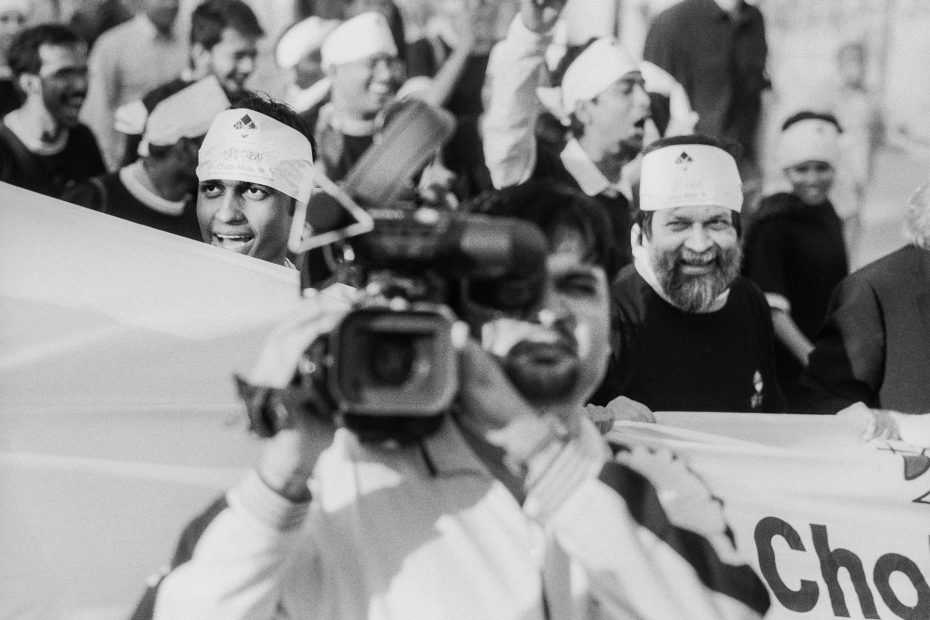
    Eighteen years is a long time, measured by tectonic changes in what is expected, accepted, or challenged in photography. Steve McCurry’s “Afghan girl” (1984) might still be taken today, but the audience would immediately raise questions of exotification and instrumentalisation. The subject of the western gaze is no longer “willing,” and is shooting back, with camera and pedagogy. Chobi Mela (CM) played a role in all this, creating a robust Global South photography context over two decades. One of Asia’s early photography bienniales, it had a regional ripple effect, inspiring affinity groups in China, Nepal, India, and elsewhere.

    OPEN CALL: New Waves of Documentary, Practice as Research

      The program is designed for both self-taught photographers and recent graduates from academic courses interested in plurality of visions and methods. It intends to develop a new body of work that requires an extended period of engagement. The program offers nine selected individuals the opportunity to develop a project with the VII Academy and Pathshala Institute tutors’ guidance.

      No to Harassment!

        The Zero edition of Chobi Mela is committed to operating as a safe space which is inclusive and supportive in which no forms of discrimination are tolerated. Core principles which its initiators, Drik and Pathshala abide by, involves creating a respectful and fear-free environment for people of all genders, race, class, religion, ethnicity and sexuality.

        Secretariat update- Chobi Mela 2021

          We are delighted to announce that Chobi Mela will mount a special edition, “Shunno”, to create a space for artists, thinkers, healers, activists, and visionaries in self-reflective, experimental processes; to assemble and disassemble, to navigate a web of communities, relationships, and collaborations.

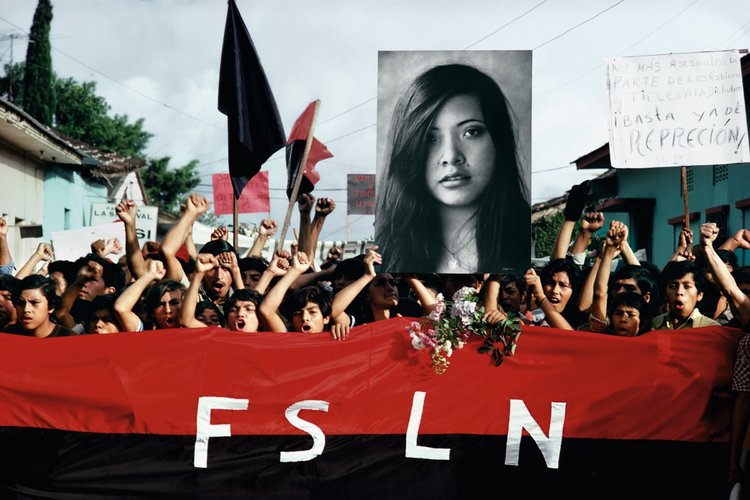
          সুজান ম্যাইসিলাস ও নিকারাগুয়া

            সাউথ ভার্জিনিয়া থেকে নিউইয়র্ক। ৪৪ ইরভিং স্ট্রী থেকে মট স্ট্রীট। এমনি বেড়ে ওঠার নানা জায়গায় কাজের ছাপ রেখেছেন তিনি। ছোট্ট ইটালী নামে পরিচিত মট স্ট্রীটের পাড়ায় আছেন ১৯৭৪ সাল থেকে। ইমিগ্রেন্ট ইটালীবাসিদের আস্তানা নিউইয়র্কের ম্যানহেটেন ডাউন টাউনের মটস্ট্রীটের বেসমেন্টেই এখন আলোকচিত্রী সুজান ম্যাসাইলাস এর স্টুডিও এপার্টমেন্ট। নিজের মতো মগ্ন হয়ে কাজ করেন, কাজ নিয়ে ভাবেন তিনি এখানেই। এই পরিচিত পাড়া একসময় ছিলো অপরিচিত। তখন সুজানের বয়স ২৬ বছর। সাইকেল নিয়ে আসতে যেতে একসময় পরিচয় হয় প্রতিবেশী ইটালীয়ান আমেরিকান কিশোরীদের সাথে। ছবি তোলেন তাঁদের নিয়ে। অপরিচিত জায়গা আর মানুষ পরিচিত হতে থাকে এভাবেই। এরপর অনেক সময় পেরিয়েছে এখন ডক্যুমেন্টারী আলোকচিত্রী সুজান ম্যাইসিলাসকে একবাক্যে সবাই জানেন ম্যাগনাম ফাউন্ডেশনের প্রেসিডেন্ট হিসাবে। ওয়ার ফটোগ্রাফার হিসাবে রয়েছে তাঁর বিশেষ পরিচিতি। ছবি, চলচিত্র এবং বই প্রকাশের এর মধ্য দিয়ে সুজান কাজ করেছেন ল্যাটিন আমেরিকার নিকারাগুয়া, এল সালভাডোর ও চিলির ওপর। কাজ করেছেন কুরদিস্থান এর জনগণের ওপর। এছাড়া আলোকচিত্রী হিসাবে তার যাত্রার শুরুর দিকে কাজের মধ্যে উল্লেখযোগ্য ৪৪ ইরভিং স্ট্রীট, প্রিন্স স্ট্রীট গার্লস, কার্নিভাল স্ট্রাইপারস, পেন্ডোরা বক্স। রিফুজী নারীদের জীবনসহ নানা বিষয়ে রয়েছে তাঁর কাজ । কাজ করেছেন নাইন/এলেভেন এর ওপরও।

            Chobi mela X fellows to explore the homogeneity and dissonance of parallel expansion

              Chobi Mela, the international festival of photography since its inception in 2000 has been the most significant photographic event in Asia, and the first of a regular biennale, one that has become one of the highlights of the Asian calendar. It is organised by Drik Picture Library Ltd. and Pathshala South Asian Media Institute. The Tenth edition of Chobi Mela will be held from February 28 till March 9, 2019.

              The archivist and the editor

                Archiving and editing are perhaps the two least glamorous activities in the life cycle of a photographer’s work. And yet without these two (and much of the time  we havebeen without these on the subcontinent) works are lost to us much earlier than is necessary. They often also lose their power; without a great edit, a set of images can remain just that, static in a waiting room, paused with no purpose.

                Pushing the boundaries of the image with “Chobi mela fellows”

                  “Transition” is a fitting theme for the upcoming edition of Chobi Mela, one that aligns with the evolution of Bangladesh’s art scene as a whole. Photography in the country has enacted a momentous evolution in recent years from a medium mainly oriented towards documentation to a much broader endeavour. The festival’s past edition was pivotal for that development. Curated by a multidisciplinary team with diverse backgrounds,[1] Chobi Mela VIII brought to the fore experimental photographic approaches which were often informed by other artistic practices. The choice to organise Chobi Mela’s first ever fellowship programme during this year’s edition must be read as a continuation of that drive.

                  An ever-widening gyre

                    When asked why I had come to Dhaka for Chobi Mela VIII, the only answer I could give was that my curiosity had gotten the better of me.

                    As a human rights specialist, the strong, socially-engaged photography coming out of Bangladesh had captured my attention in recent years. Indeed, at a certain moment, it suddenly seemed that Bangladesh was producing a disproportionate percentage of the world’s finest emerging photographers.  Why was this?

                    Shirin neshat: a soulful nomad in search of a home

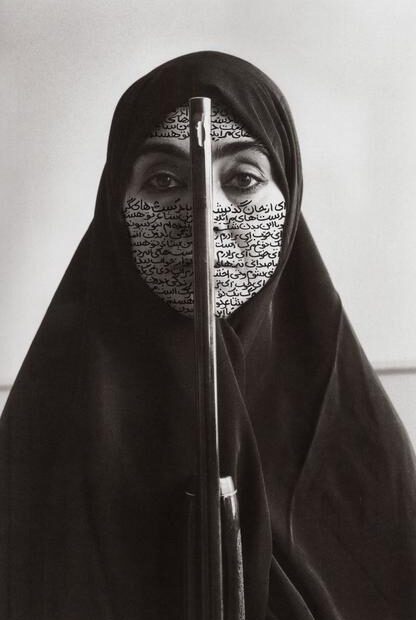
                      It is difficult to write about someone whose work you love so much and question endlessly. Individuals like Shirin Neshat, Nan Goldin and Marina Abramovic steal your heart and soul, stretch your limit of core, and leave you empty – awestruck. They create magic, a poetry with their fragility and make you submit; make you pick your fragile self up to ‘be’. When you wake up to your usual banal world everything seems petty, and you feel tiny in the grand narrative of life. That’s the kind of impact I had when I stumbled upon Neshat’s work in 2007. Since then I have been tracing her foot print left on the web and in the galleries to understand her journey. Her ontological positions were beautifully translated into her work which is bound to grow on a keen audience.

                      About Us