Moonis Ahmad is a visual artist from Kashmir working across installation, sculpture, sound, video, and programming. His practice explores the afterlives of the dead, conjuring specters that challenge established power, linear time, and territorial boundaries while investigating alternative temporalities and marginalities at the edges of visibility and exception. He completed his doctoral research at the University of Melbourne in 2021.
Ahmad has exhibited nationally and internationally, with residencies including Stadtgalerie & HSLU, Switzerland (Pro Helvetia), and he received the Schloss Solitude Fellowship (2023–24), the Arts House Makeshift Publics Programme Award (2022–23), and the FICA Emerging Artist Award (2017–18). He is also part of the Kochi Biennale 2025 and works between Kashmir and Melbourne.
Moonis Ahmad Shah
GUL-E-CURFEW: AN INDEX OF THE STRANGE AND INCONSISTENT PHANTOMS FROM EVERYWHERE
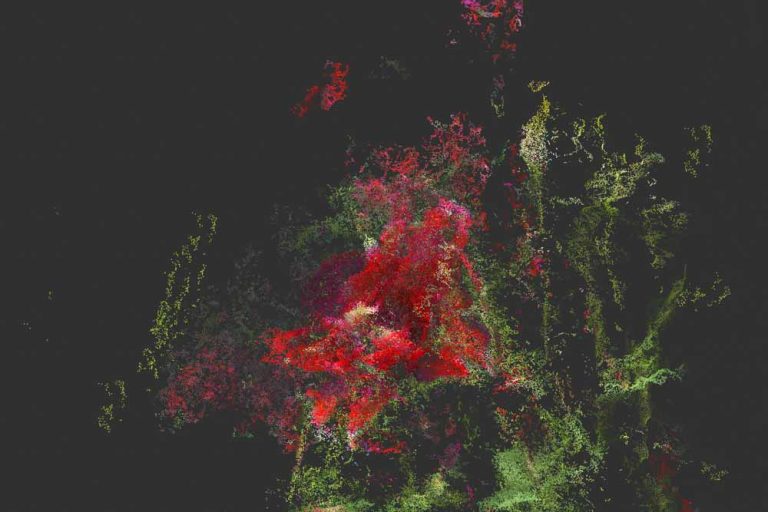
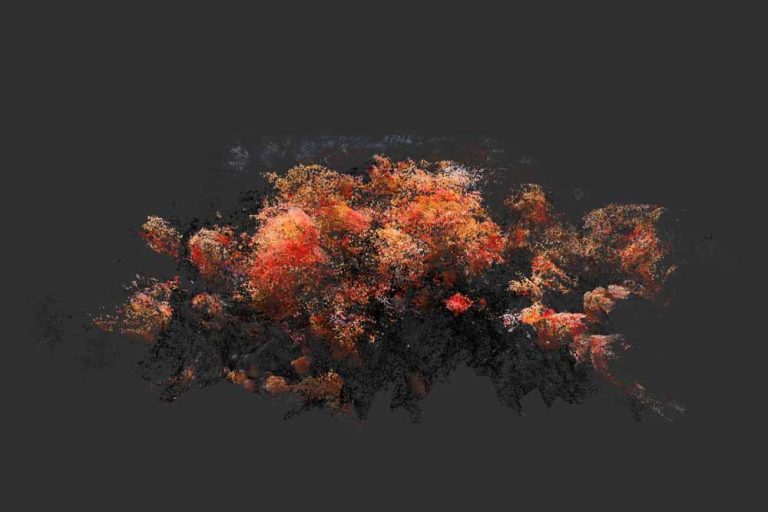
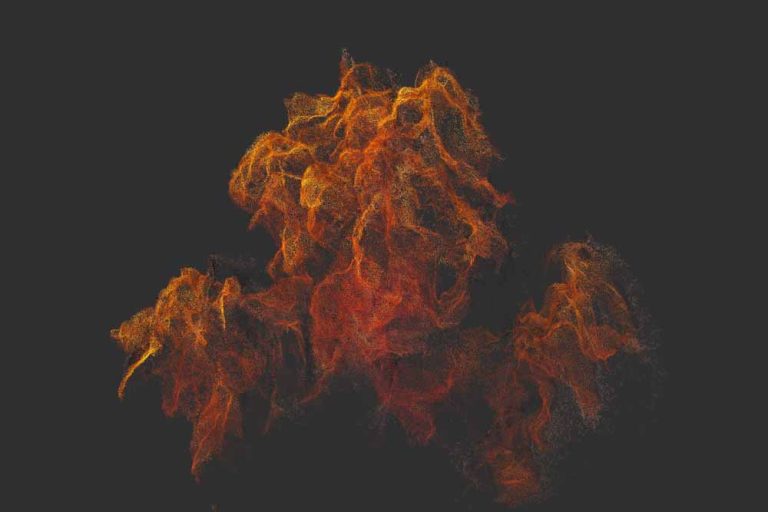
Gul-e-Curfew: An Index of Strange and Inconsistent Phantoms from Everywhere speculates how ecology as an organism responds and adapts to territorial conflicts and their environmental impact. The work indexes various fictional biological beings, ranging from flowers to abstract organisms supposedly emanating within the sub-terrains of contested ecologies and territories.
Gul-e-curfew (flowers of curfew) juxtaposes a common metaphor of flowers and beauty associated with Kashmir against states of exception and besiegement. Interpreted as “here, flowers are spectres that will haunt you in spring” it challenges the lingering presence of occupation that casts a shadow on the land and speculates a militant response emanating from within the besieged ecology. Generated through sampling hundreds of images of flowers in Kashmir, the images conjure ecological beings that embody a spectral presence. These reconstituted entities rupture any allegiance to provenance, nation-state or colonial identification. Instead they permeate beyond borders, threading lines across sites of violence, from the strip-search routine in Kashmir to the contractual labour binding workers to exploitation in Bangladesh.
Using the taxonomical structure of the colonial apparatus, the index masquerades as a template of study of both anatomy and ecological becoming. However, within it lay residues of that which cannot be categorised—references to the texture of snowflakes resembling a shroud, to the speech of tongues in languages unknown, to memories of incarceration lodged in the walls of prisoner cells and torture centres. In its invocation of systems of oppression across territories and temporalities, this anarchic archive is a refusal of exceptionalism of these occurrences. Presenting them neither as isolated nor singular, the index builds new cartographies of gathering. These disobedient flowers re-imagine ecologies as militant processes moving away from their colonial representation as passive pastoral objects.