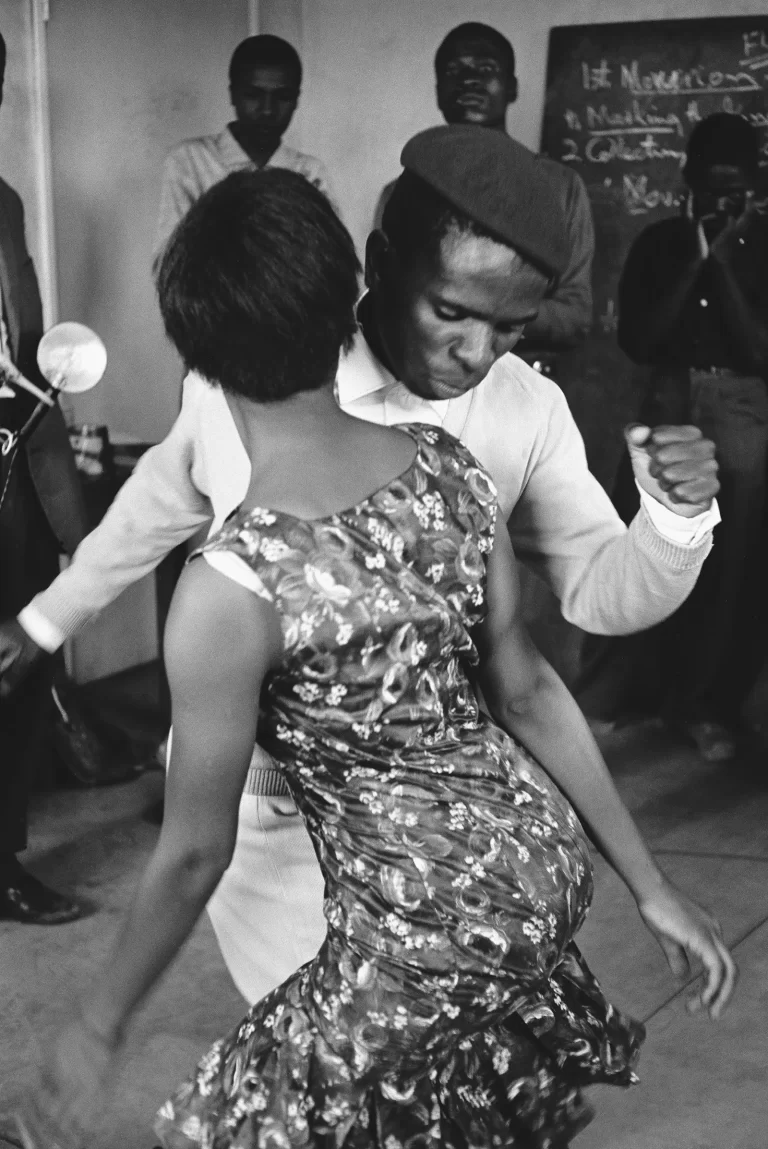
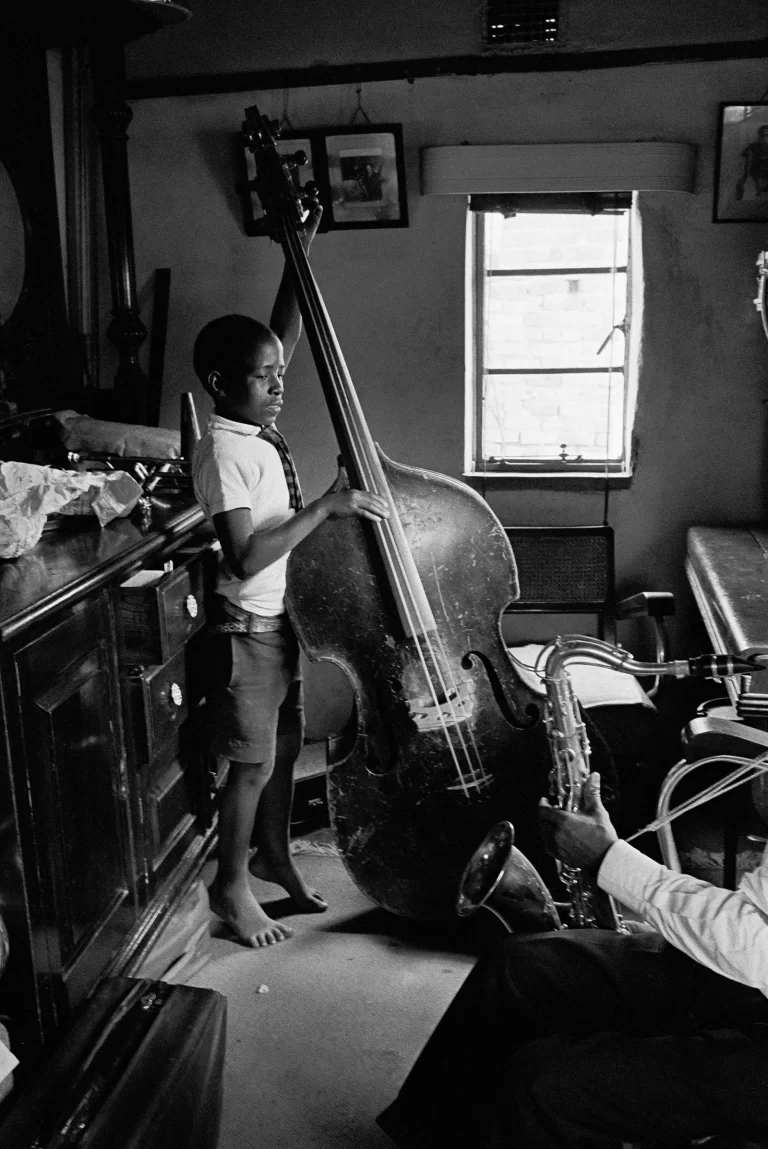
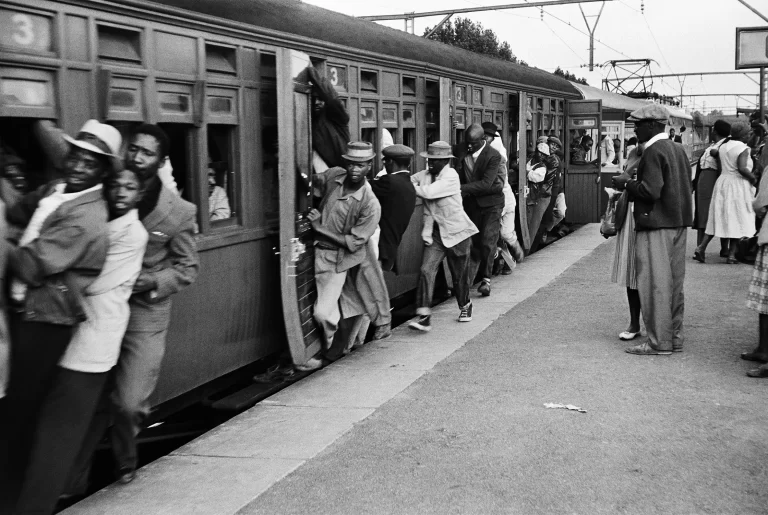
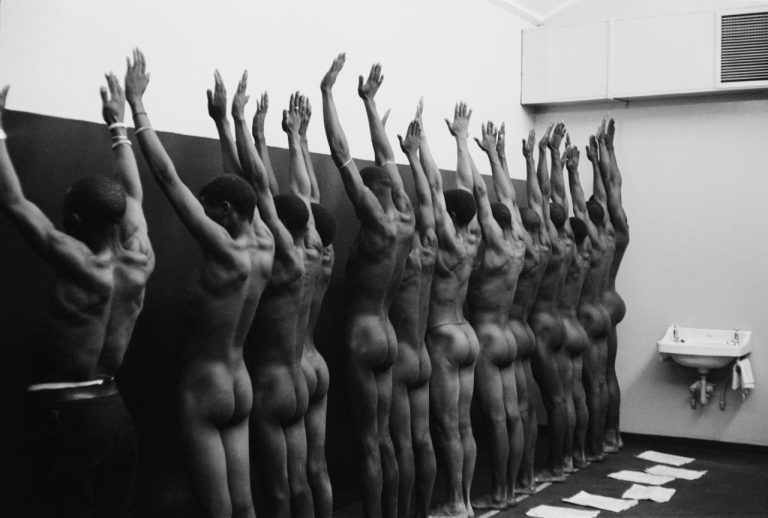
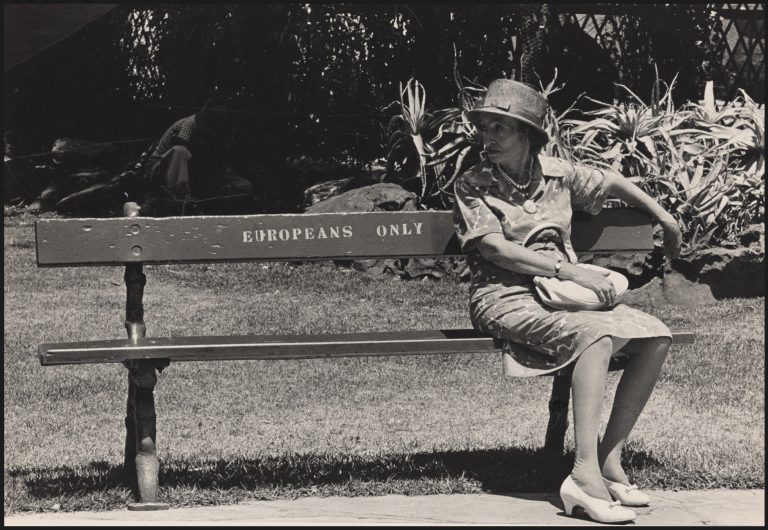
Ernest Cole’s House of Bondage (1967) stands as a landmark in photographic resistance—a searing chronicle of life under apartheid. Presented here as part of the exhibition, it invites viewers into the world exposed with rare courage and intimacy. Each image unveils an aspect of the racial and political machinery that defined South Africa’s segregated society.
Through evocative images, Cole captured the heart-wrenching scenes of daily life under apartheid’s grip. He documented the impact of the Pass Laws, the Bantu Education Act, domestic work, healthcare, and other aspects of apartheid. The work unveils the stark contrasts between the lives of privileged white citizens and the marginalised Black population. It sheds light on the indignities suffered by Black workers, their families torn apart, their aspirations stifled. Cole’s photographs expose the cruelty of racial classification, showing identification checks and police harassment, segregated facilities, separate amenities, and the underlying violence that upheld apartheid. These images also portray the strength and resilience of those who resisted, showcasing moments of unity, protest, and solidarity.
The portrayal of apartheid South Africa in House of Bondage continues to echo today. It stresses that the struggle against racial discrimination is far from over, serving as a haunting reminder of the consequences of discrimination and the importance of fighting for justice and equality.
Ernest Cole was a South African photographer known for his groundbreaking 1967 book “House of Bondage”. In the early 1960s, he systematically documented the lives of Black South Africans under apartheid, capturing mine workers’ harsh conditions, the relentless passport controls, the long and exhausting daily commutes, the subservient roles of Black domestic workers in white households, and the struggles of street children he called the “Heirs of Poverty.”
Cole fled South Africa in 1966; the apartheid regime banned him and revoked his passport two years later. He died of pancreatic cancer in 1990. His work has since been revisited in Ernest Cole: Photographer, the re-release of House of Bondage, and The True America.